Building a capsule wardrobe is harder than ever - Ep 115
For years I’ve heard people refer to their capsule wardrobe and it felt like being an outsider who didn’t get an invite to a club.
While having a capsule sounds great on paper, social media pressures, rising prices, and declining clothing quality make it harder to curate one today.
Between trying to spend intentionally and navigating a shifting fashion landscape, it makes you wonder if a tiny, timeless wardrobe is even attainable anymore or if we need to completely redefine the concept.
Create & consume:
What Austen is creating: neighborhood notes Instagram carousel
What Austen is consuming: Party Girl episode of Note to Self
In this episode:
The high cost of lower quality
To understand why building a capsule wardrobe feels so overwhelming right now, we first have to look at the financial realities of shopping today. Clothing is simply more expensive across the board.
Inflation, rising tariffs, and general production costs have driven prices up significantly.
Spending two hundred to three hundred dollars on a single sweater is just not realistic for most people.
Many of us are forced to prioritize basic necessities over wardrobe upgrades.
Even in my own life, I have not been shopping for much fun fashion lately, focusing instead on everyday essentials, which can feel a bit discouraging when you love personal style.
At the same time, fast fashion is no longer the sole culprit behind declining quality.
Brands across the entire industry have changed drastically over the years.
Some legacy brands have relocated production, others are scrambling to outpace relentless trend schedules, and smaller businesses are just trying to keep their lights on.
Leadership changes and burnout among traditional fashion workers have caused major shifts in how clothes are made.
As production becomes cheaper and faster, the quality plummets. Inconsistent sizing, unpredictable fabric compositions, and fluctuating production standards make online shopping a gamble.
When former go-to brands become almost unrecognizable, investing in forever pieces feels like a high-risk decision.
Social media, microtrends, and outfit anxiety
Beyond the physical garments, social media has fundamentally altered our relationship with outfit repeating. In the past, repeating an outfit was completely invisible to the broader world. Now, every look captured on camera lives online indefinitely.
Content creators face immense pressure to produce constant novelty, as fashion algorithms heavily favor brand-new items that generate affiliate links and commission.
However, this psychological pressure extends far beyond influencers.
Everyday people feel it too when dressing for weddings, vacations, or milestone birthdays, leading to a subtle but constant reinforcement of overconsumption.
This dynamic is further fueled by hyper-speed microtrends.
We have watched fashion cycle rapidly through quiet luxury, coastal grandmother, tomato girl, and fisherman aesthetics in a matter of months.
When even classic, foundational garments get labeled as suddenly in or out of style, it becomes increasingly difficult to trust what will actually hold value in your wardrobe over time.
How the rental economy changed the formula
Because keeping up with permanent ownership has grown so complex, the rental economy has completely changed the math.
The rise of clothing rental services means more people are choosing to hold onto pieces for just a few weeks instead of a lifetime.
Services like Rent the Runway, Nuuly, and FashionPass have made high-end fashion accessible without the commitment, while platforms like Vivrelle and local sharing apps like Pickle are thriving in places like New York City.
Renting has become my favorite approach for specialized needs, including wedding guest dresses for four different events, curated outfits for trips to places like Nantucket and New Zealand, and bold statement coats for New York Fashion Week.
Redefining the modern capsule wardrobe
Given all these shifts, maybe a capsule wardrobe does not need to be a tiny, restrictive collection.
The core goal does not have to be reducing your wardrobe to thirty neutral pieces or committing to one uniform aesthetic for life.
Instead, a realistic capsule is about finding pieces that can be in conversation with each other to make getting dressed effortless.
It is about owning items you genuinely wear, curbing impulse buys, practicing intentionality, and deeply understanding your personal taste.
A capsule mindset remains incredibly helpful during specific life moments, such as packing efficiently for a vacation or starting fresh after a major life transition.
The staples that made the cut
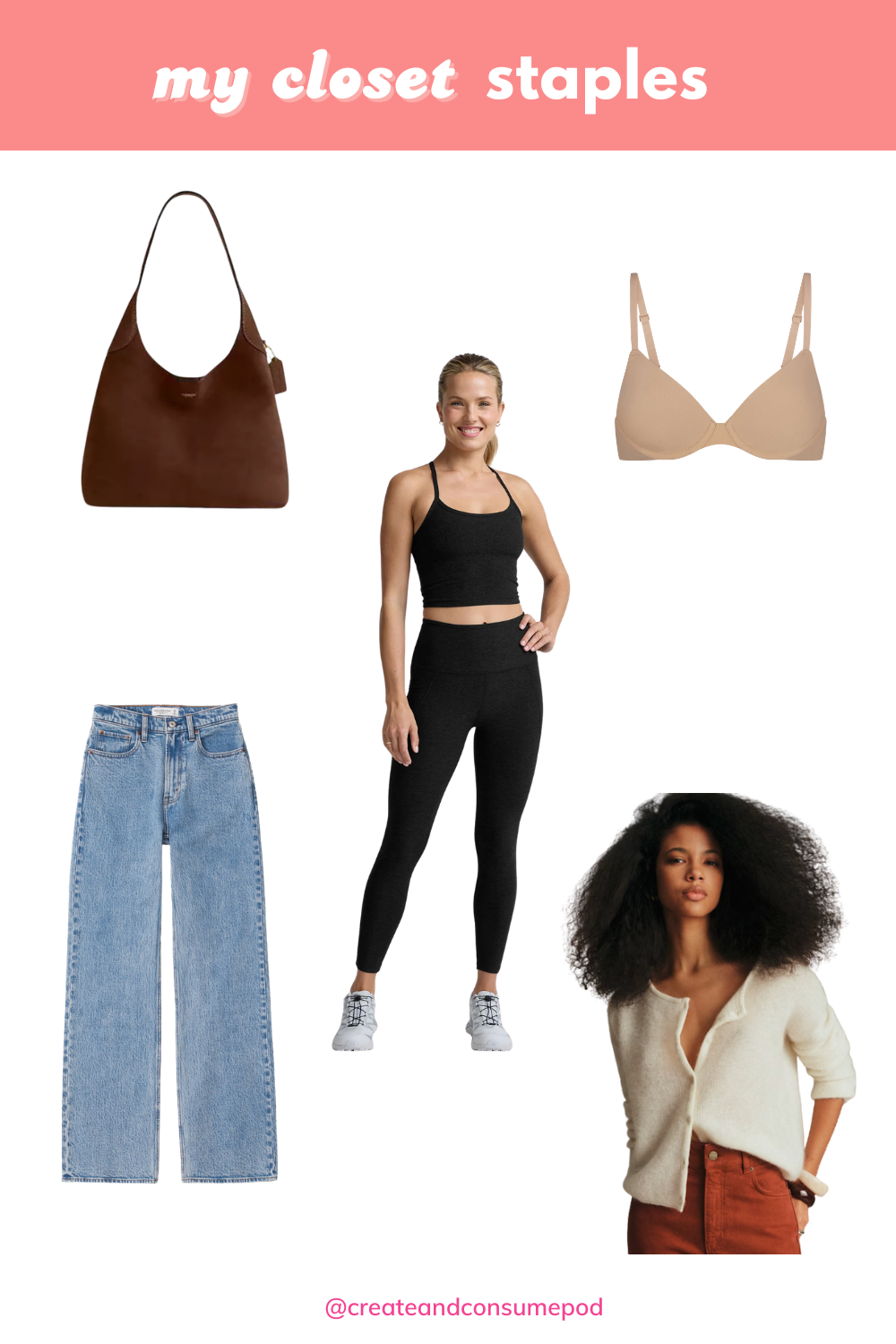
Despite the chaotic fashion landscape, there are still specific items that have earned permanent status in my own closet. These are the survivors of every closet declutter, pieces I foresee keeping until they completely wear out.
My ultimate staples include my Abercrombie jeans, Madewell jeans, a versatile French Connection skirt, and my favorite Sézane blouses alongside a thin Sézane cardigan.
For layering, my American Eagle denim jacket, Rebecca Minkoff leather jacket, Zara white blazer, and Abercrombie leather pants consistently deliver.
My Zara brown silk midi skirt, Coach Brooklyn bag, Beyond Yoga workout top and leggings, Skims t-shirt bras, and a trusted pair of nude heels from Topshop that I have already had resoled all hold permanent spots.
These specific items survived because they hit the ultimate sweet spot of versatility, durability, absolute comfort, low cost per wear, and multi-season functionality.
Summary:
By shifting our understanding of what a capsule wardrobe represents, we can move away from strict fashion rules and focus on building a collection of clothing that genuinely works for our everyday lives.
Ultimately, a successful closet is not defined by a specific number of items, but by finding versatile, quality pieces that make getting dressed feel completely effortless!
Listen on Apple
Listen on Spotify